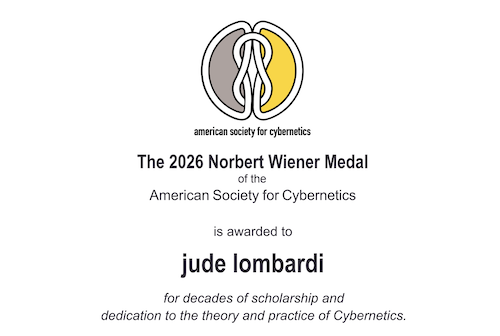
I am thrilled to accept the American Society for Cybernetics (ASC) Norbert Wiener Medal for my dedication, work, support and involvement with the ASC organization over the years. It is truly an honor.
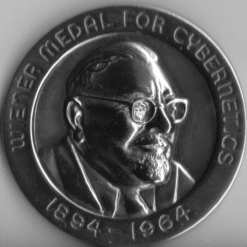
Norbert Wiener Medal
is awarded for achievement in transdisciplinary research in cybernetics and system thinking.
The front of the medal shows a bas-relief of Norbert Wiener, and the obverse is inscribed with the name of the recipient.
Below is the acceptance speech I presented (via zoom) at the ASC 2026 Conference in Brazil this past August.
Norbert Wiener Medal Acceptance Speech
august 5, 2026
It is an honor to be recognized by members of the American Society for Cybernetics for my work over the years in this transdisciplinary approach for understanding understanding and being human. The ASC holds a special space in my life, for I have met many people through this organization who have oriented my thinking and being in many many ways.
I am going to tell you what I see and what I have seen through my partial memories. In honor of Ernst von Glasersfeld, whose autobiography, “Partial Memories Sketches of an Improbable Life” provokes me to do so. Thank you Ernst.
I first learned about the ASC in 1991, when visiting cyberneticians in Brussels. I came home and immediately called Rodney Donaldson, the current president of the ASC at that time, and learned that the next ASC conference was schedule for October of 1992.
Organized by Rodney, the conference took place on a small island off the coast of the Puget Sound in Washington state. Approximately 65 of us spent the next 5 days exploring, in a variety of ways, the cybernetics of Humberto Maturana and Herbert Brün Conversing about language, emotion, the social and the ethical. I didn’t understand a word ether of them spoke – yet — I knew intuitively I was where I needed to be. Magic.
During the conference I had a radical epistemological shift in my thinking about thinking. Provoke by Larry Richards when cluing me in on the biology of observing over dinner the first night. Again, I didn’t understand a word.
In the evenings after most things were said and done, Herbert Brün and Rick Burkhardt played the piano while Paul Pangaro sang in English – and Italian. Many of us danced together for the first time. The atmosphere was perfect.
I went to the conference as a PhD student exploring cybernetics as a humane way for understanding living systems. I left as a video-ethnographer. Now some 30 years later it is a fundamental of what I do.
Paul Pagaro suggested I show one of my videos during my acceptance speech tonight. So I will attempt to dance with a few of my videos from the past with comments along the way.
On Monday I had the opportunity of being a fly in the room during the “Confluences of Voices: A history of the ASC,” session. What I say now and let others say for me via the videos is a reflection on what I heard then and a culmination of many years of work.
When we thought I was going to attend this conference in person, I was asked by the organizers to share my reflections on what I consider today’s “urgencies”, as well as questions that emerge from my praxis while enacting cybernetics. My response to their request was a paper entitled, “An Ecology for Beeing“.
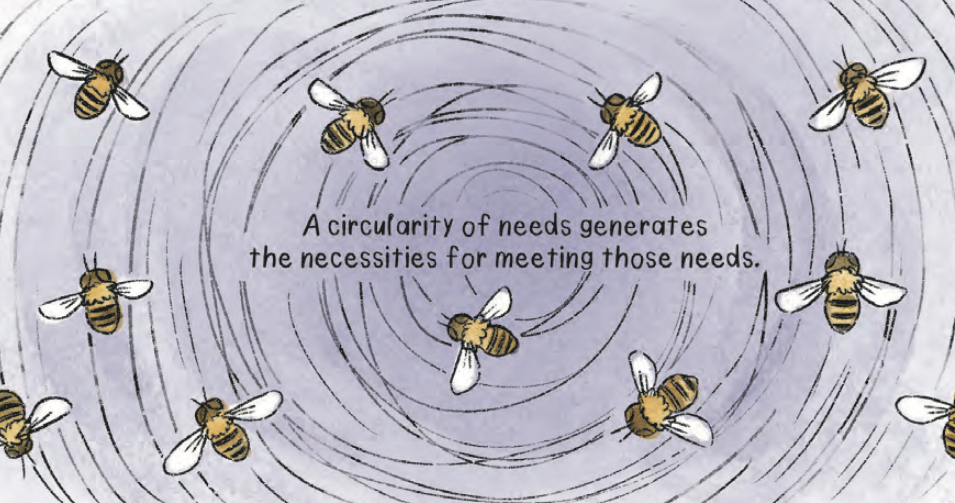
Circularity
From the beginning the concept of circularity has been a fundamental of cybernetic thinking and doing. It led to the creation of a second cybernetics, the cybernetics of cybernetics triggered by Margaret Mead, articulated by Henz von Foerster, and performed by Herbert Brün. Second cybernetics emphasizes the role of language, oneself, and every I’s responsibility for co-creating and co-constructing our worlds.
Circularity of Needs
Herbert Brün introduced me to the idea of a circularity of needs which includes a need for peace and the necessities for meeting that need. He suggested when peace is a need – not an achievement – a new language and languaging is more likely to emerge.
Circularity of Language
Change the language, change the thinking. Change the thinking, change the doing. Change the doing, change the thinking. Change the thinking, change epistemologies. Change the epistemologies, change the ontologies. Change
the ontology, change the language, change the language, change the doing, change the doing, change the languaging…
The inertia of Language
Some say that cybernetics has made little progress in generating alternative solutions. Stafford Beer once declared that cyberneticians, and others, due to media, and I say the inertia of language, use cybernetic terms like “feedback” in manners that don’t fit with what they were designed to describe. So they don’t enact cybernetics.
So, how do we change the language so that we as cyberneticians speak it– rather than it speaking us, opening spaces for radical ideas to emerge? In other words, how do we retard the decay of cybernetics concepts?
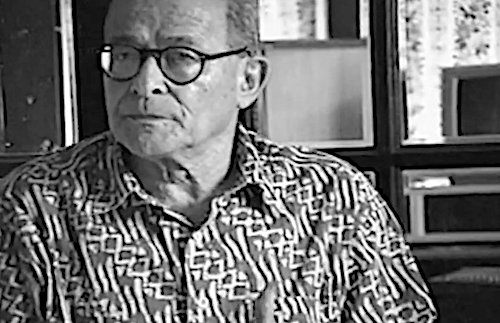
avoidance
As a videographer for the ASC it has been my pleasure and delight to video many ASC members over the past 30 some years. Many of became my mentors.
People of that “second-generation of cyberneticians” that Allena Lennard mentioned on Monday during the opening session. Herbert Brün, Heinz von Foerster, Humberto Maturana, Mary Catherine Bateson and Ernst von Glasersfeld.
Others have also been fundamental to my growing and thinking processes. Annetta Patretti, Larry Richards, Paul Pangaro, Mark Enslin and Susan Parenti to mention a few. I particularly remember Susan’s performance at the 2012 ASC conference when accepting the Warren McCullah award for Achievement as an award for Avoidance.
I first heard about avoidance as a cybernetic technique from Herbert Brün at the 1992 ASC conference. Larry Richards wrote a paper about it, after attending the 2011 ASC conference. And Susan Parenti performed it when accepting the Warren McCulloch Award for Avoidance. Brillant.
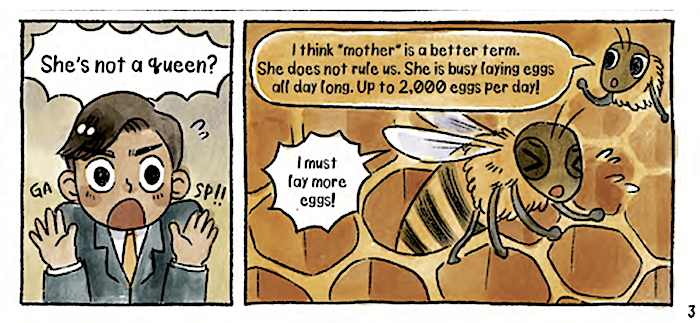
Avoidance has become one of my favorite cybernetic techniques for creating the world I desire to be a part of – rather than – apart from. One I used a LOT when writing the book The Bees’ Needs in which I intentionally avoided language that maintains a worldview, an Occidental ontology, that embraces separations, hierarches, competition, and violence as our natural ways of being human. Opening spaces for the emergence of an alternative worldview to emerge when explaining honeybee behavior as a “sacred unity” rather than “super organism,” that the Queen bee was more like a mother than a queen.
Indigenous Peoples
Finally, and not least, I want to recognize the Indigenous people of Brazil and the world. Thank you. To say this is not enough. For I and many others have come to know that Indigenous ways of being are a model for addressing the radical ontological shift necessary for our survival on this planet. A way of being that reflects a sacred unity embracing all living entities.
A Sacred Unity is an ecology of mind that entails a way of thinking about thinking when thinking about the interconnecting webs, patterns, forms and rhythms that generate an interdependent ecological balance among all living things with our biosphere, multiverse and doings.
Both Mary Catherine and Gregory Bateson thought a cybernetic ontology might offer a language for creating the necessary radical alternative worldview we need now. An ontology that, through its radical alternative languaging embraces the sacred unity of all living systems as a part of, not apart from the multiverse that sustains us all.
My cybernetic praxis is oriented by my experience as a honeybee steward. For it is through my living with the honeybees that I have come to understand more deeply that emotioning, languaging, thinking and doing generates a web of living that is currently full of dysfunctions. A not so sacred unity.
If you’re looking, it’s obvious that our interventions often make things worse – even wicked. I think (not believe) that many of our wicked problems generate wicked solutions related to our Occidental ontology. An ontology that at its core speaks us, rather than us it. A consequence of what Manni Brün referred to the inertia of language, traces left of paradigms gone by. An inertia that generated centuries of languaging in ways so that many parts of our naturewere erased. Along with the indigenous peoples that conserved them. Peoples with long histories and herstories for weaving language, languaging, culture and their landscapes into their daily lives. A tradition that conserves a deep praxis for understanding the relations and interconnections of all living creatures with our environments – as well as our interdependence with the multiverse. A sacred unity an ecology of mind for being and beeing.
One day when working with the honeybees at the apiary, I questioned my doing. Then it came to me, the best I can do is all I needed to do. I discovered I am best, in and out of the hives, when living in an embodied, reflective, presence, swimming in zero time. A sacred unity appears to emerge.
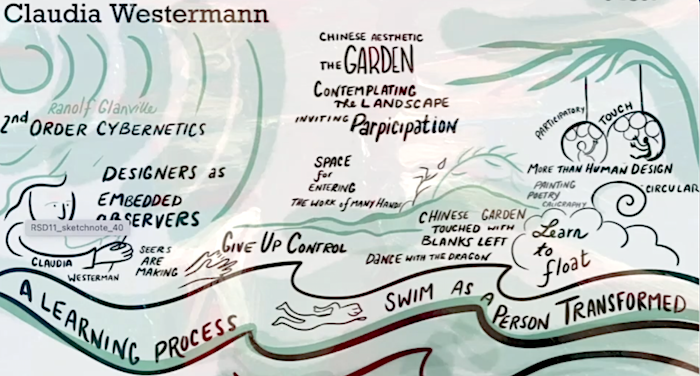
Thank you for this recognition – it means a lot to me.